
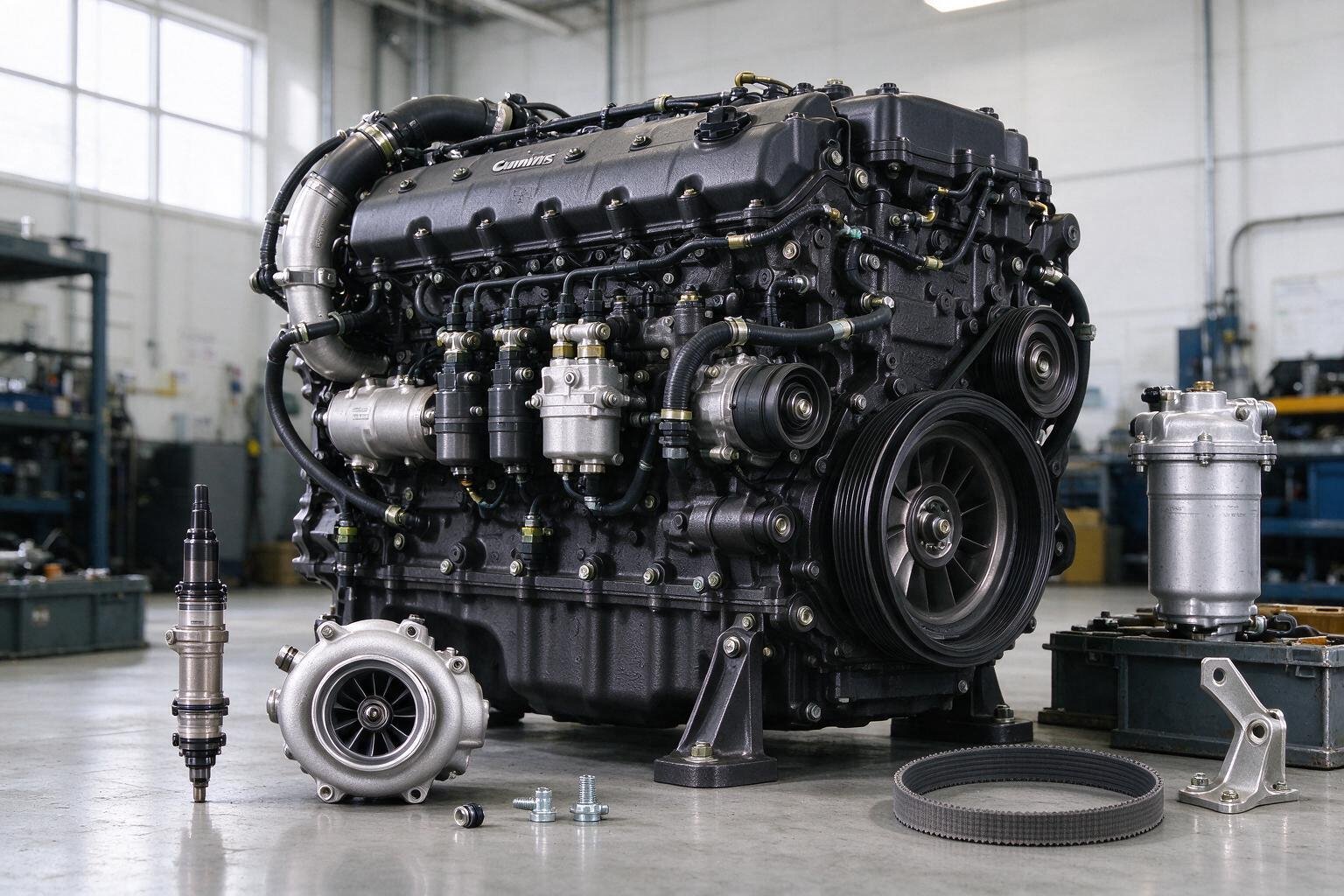
This Cummins ISX12 engine parts buying guide begins with the basics: the ISX12 is a 12-liter inline-six diesel engine used in heavy-duty trucks and industrial applications. It belongs to the ISX series and shares design similarities with the larger ISX15, but the two engines use distinct part numbers. Components such as cylinder heads, injectors, and turbochargers are not interchangeable between the ISX12 and ISX15 despite visual similarities. Before purchasing parts, confirm the engine’s exact configuration using the Engine Serial Number (ESN). The ESN is stamped on the dataplate and also appears on the engine block. This number is essential for accurate parts lookup because it identifies the specific build, including emissions calibration and component revisions.
Critical Components and Their Functions
Cylinder Head Assemblies
The ISX12 cylinder head houses the valves, injectors, and camshaft. Variations exist across emissions levels, so buyers should match the head casting number to the engine’s build configuration rather than relying on the model name alone.
Fuel Injectors
The ISX12 uses high-pressure common rail fuel injectors. Injector part numbers vary by engine rating and emissions tier, and installing incorrect injectors can cause rough running, poor fuel economy, and fault codes.
Turbochargers
Some ISX12 configurations use a variable geometry turbocharger (VGT). Replacement turbos must match the engine’s boost requirements and electronic control strategy; a mismatched unit will not calibrate correctly with the ECM.
EGR Coolers and Valves
Engines with cooled EGR require specific EGR components. Cooler or valve failures can lead to coolant loss, white smoke, and performance degradation.
Oil Pumps and Coolers
The ISX12 oil pump is crankshaft-driven. Oil cooler failures can cause coolant and oil mixing, so these parts merit inspection during any overhaul.
Pistons and Liners
The ISX12 uses wet cylinder liners. Piston part numbers differ by compression ratio and emissions level, so verify compatibility before ordering.
Bearings and Gaskets
Use bearings that meet Cummins specifications, whether genuine or from a reputable aftermarket supplier. Gasket sets should match the engine’s configuration, including EGR and emissions hardware.
| Component | Key Verification Point |
|---|---|
| Cylinder head | Casting number |
| Injectors | Engine rating and emissions tier |
| Turbocharger | VGT vs. fixed, ECM calibration |
| EGR components | Cooled EGR configuration |
| Pistons | Compression ratio and emissions level |
| Gaskets | Full engine configuration |
Genuine vs. Aftermarket Parts: Considerations
Genuine Cummins parts are manufactured to the latest specifications for the ISX12 and typically come with a warranty. They are sourced through authorized dealers, which provides traceability and a clear channel for warranty claims. Buyers should confirm the part number against the engine serial number, since Cummins has issued revisions to components such as injectors and EGR coolers over the production run.
Aftermarket parts vary widely in quality. Some are produced by original equipment suppliers (OES) that build the same components for Cummins, and these can be functionally equivalent. Others are reverse-engineered with lower tolerances, different metallurgy, or simplified internal geometry. For critical components such as fuel injectors, turbochargers, and cylinder heads, genuine or OES parts are often preferred to maintain reliability and emissions compliance. Injector calibration and turbocharger tolerances directly affect fuel delivery and aftertreatment performance, and small deviations can trigger fault codes or reduce service life.
Aftermarket parts can offer cost savings for non-critical items such as filters, belts, and gaskets. Buyers should verify certifications (for example, ISO/TS 16949) and the supplier’s reputation before purchasing. Total cost of ownership should guide the decision: a lower-priced part that fails prematurely increases downtime and labor expense, particularly on components buried behind other assemblies. Request test data and warranty terms from aftermarket suppliers where available, and confirm that the part meets or exceeds OEM specifications rather than merely fitting the application.
| Part category | Genuine/OES preference | Aftermarket acceptable |
|---|---|---|
| Fuel injectors, turbochargers, cylinder heads | Preferred | Only with verified OES equivalence |
| Filters, belts, gaskets | Optional | Yes, with certification checks |
Inspection and Verification of Used or Remanufactured Parts
Used and remanufactured components can be a cost-effective option for Cummins ISX12 repairs, provided each part is inspected and documented before installation.
Used Parts
Used parts require close inspection for wear, cracks, and corrosion. Cylinder heads should be checked for warpage with a straightedge and feeler gauge, and valve seats examined for pitting, recession, and contact pattern. Used injectors should be flow-tested and checked for spray pattern quality; a visual inspection alone does not confirm serviceability.
Remanufactured Parts
Verify that the remanufacturer follows Cummins-approved processes and provides a written warranty. Remanufactured injectors and turbochargers should arrive with test reports showing flow rates, calibration data, or bench test results.
Part Number and Serial Number Checks
Confirm the part number matches the engine’s ESN. Remanufactured parts often carry a different part number suffix than the original component, so cross-reference against Cummins documentation rather than assuming a mismatch is an error.
| Check | Used Parts | Remanufactured Parts |
|---|---|---|
| Wear and corrosion | Visual and dimensional inspection | Certificate of conformity |
| Cylinder heads | Warpage and valve seat check | Machining and pressure test records |
| Injectors and turbos | Flow and spray pattern testing | Test reports required |
| Part numbers | Match to ESN | Verify suffix and supersession |
| Documentation | Service history if available | Replaced component list |
Documentation and Final Rejection Criteria
Remanufactured components should include a certificate of conformity and details of replaced components. Reject any part with visible damage or missing components. For electronic components, confirm connectors are intact and free of corrosion before purchase.
Sourcing and Supplier Evaluation
Authorized Cummins dealers are the primary source for genuine parts. Using the engine serial number (ESN), a dealer can verify correct fitment for a specific ISX12 build and provide technical support on installation and superseded part numbers. This is particularly relevant where Cummins has revised a component or where an ESN breaks within a production change.
Independent parts distributors may offer aftermarket and remanufactured options, often at lower cost and with broader stock availability. Buyers should evaluate distributor reputation, return policy, and the technical knowledge of the counter staff. A distributor who cannot confirm the part number against the ESN, or who is vague on warranty coverage, warrants caution.
Online marketplaces are convenient but carry risk. Before purchasing, verify seller ratings, confirm part authenticity through markings and packaging, and read warranty terms in full. Listings that omit the ESN range or the manufacturer of an aftermarket component should be treated as incomplete.
For international buyers, shipping cost, customs duties, and delivery time materially affect total landed cost. Clear Incoterms should be agreed with the supplier in writing before shipment. High-value parts such as turbochargers, cylinder heads, and fuel injectors justify requesting samples or test reports; a reputable supplier will provide documentation on request.
| Supplier type | Typical strength | Primary check |
|---|---|---|
| Authorized dealer | Genuine parts, ESN fitment verification | Part number against ESN |
| Independent distributor | Aftermarket and reman options | Reputation, return policy, warranty |
| Online marketplace | Convenience and price | Seller rating, authenticity, warranty terms |
Common Failure Points and Preventive Maintenance
The Cummins ISX12 has several known wear and failure points that owners and technicians should monitor. Understanding these patterns supports informed parts decisions and reduces unplanned downtime.
Fuel Injectors
Injectors commonly fail due to contaminated fuel or normal wear on internal components. Particulate and water intrusion accelerate nozzle erosion and sticking. High-quality fuel filters and adherence to the fuel system maintenance schedule are the primary safeguards.
EGR Coolers
EGR coolers are prone to cracking and internal coolant leaks, which can produce white exhaust smoke and coolant loss. Monitoring coolant levels and performing periodic pressure tests help detect early failures before coolant reaches the intake tract.
Turbochargers
Turbocharger failures typically trace to oil starvation or foreign object damage. Restricted oil supply lines, degraded oil, and inadequate air filtration are common contributors. Correct oil supply and a properly sealed intake system are essential.
Cylinder Heads
ISX12 cylinder heads can develop cracks between valve seats. Inspection during valve adjustment intervals allows early detection of these cracks before they progress to compression loss or coolant intrusion.
Oil Coolers
Oil cooler leaks can allow oil and coolant to mix, causing sludge formation in the cooling system. Checking for sludge and monitoring oil analysis for coolant contamination provides early warning.
Preventive Maintenance Summary
| Component | Failure Mode | Preventive Action |
|---|---|---|
| Fuel injectors | Contamination, wear | Quality filters, fuel system service |
| EGR cooler | Cracking, coolant leaks | Coolant monitoring, pressure tests |
| Turbocharger | Oil starvation, FOD | Oil supply checks, air filtration |
| Cylinder head | Cracks between valve seats | Inspection at valve adjustments |
| Oil cooler | Internal leaks | Sludge checks, oil analysis |
Preventive maintenance centers on correct filter specification, regular oil analysis, and following Cummins service intervals.
Warranty, Returns, and Documentation
Warranty coverage for Cummins ISX12 engine parts varies by part type and supplier. Genuine parts typically carry a 12-month/unlimited-mile warranty, while aftermarket warranties range from 6 to 24 months depending on the brand and component. Buyers should confirm the specific terms in writing before purchase rather than relying on general category descriptions.
Warranty Terms to Verify
Several details determine the practical value of a warranty:
- What is covered: Confirm whether the warranty covers the part only, or parts and labor. Coverage for consequential damage (such as a failed injector damaging a cylinder) is uncommon and should be confirmed explicitly.
- Who performs the repair: Some warranties require repair at an authorized facility; others reimburse labor at a published rate. Out-of-network repairs may void coverage.
- How claims are processed: Ask for the claim procedure, required documentation, and typical turnaround time for approval and reimbursement.
For remanufactured parts, confirm that the warranty covers both parts and labor where applicable, and note any requirements regarding installation by a qualified technician.
Return Policies
Return terms differ between suppliers. Buyers should check whether the supplier accepts returns for incorrectly ordered parts, the return window, whether a restocking fee applies, and who pays return shipping. Core returns for remanufactured components have separate deadlines and credit terms that should be documented at the time of sale.
| Item | What to Confirm |
|---|---|
| Warranty length | 12 months (genuine) or 6–24 months (aftermarket) |
| Labor coverage | Included or parts-only |
| Return window | Days allowed and restocking fees |
| Return shipping | Buyer or supplier responsibility |
| Core return deadline | Date and credit amount |
Documentation to Retain
Invoices, part numbers, and warranty certificates should be kept for the life of the part. These records establish proof of purchase, support warranty claims, and help match replacement parts correctly on future repairs.
Cost Factors and Budgeting
Parts pricing for the Cummins ISX12 varies widely by component category. Injectors and turbochargers are high-cost items, and a single failed unit can represent a significant share of an annual maintenance budget. Filters, gaskets, seals, and hardware are relatively inexpensive and should be treated as routine consumables. Budgeting should separate these categories so that high-value replacements do not crowd out scheduled maintenance spending.
Genuine parts are generally more expensive than aftermarket equivalents. The price premium may be justified by documented reliability, consistent tolerances, and better resale value for the engine or vehicle. Aftermarket parts vary in quality, so cost comparisons should account for expected service life rather than purchase price alone.
Downtime is a cost factor that is often underestimated. Expedited shipping, premium freight, and sourcing from a distant supplier can raise the total cost of a repair well beyond the part price. Availability matters: a lower-priced part on backorder may cost more in lost operating time than a higher-priced part in stock.
Bulk purchasing of common maintenance items, such as filters and gaskets, can yield volume discounts. Overstocking slow-moving parts ties up capital and risks obsolescence, so bulk orders should be limited to items with predictable consumption.
Obtaining multiple quotes and comparing total landed cost, including shipping and taxes, gives the clearest basis for purchasing decisions. The table below summarizes typical cost and risk profiles by category.
| Component category | Relative cost | Purchasing consideration |
|---|---|---|
| Injectors, turbochargers | High | Verify part numbers and warranty terms |
| Filters, gaskets, seals | Low | Suitable for bulk purchase |
| Sensors and electronics | Moderate | Confirm compatibility with engine serial number |
| Major castings and assemblies | High | Compare core charges and return freight |