
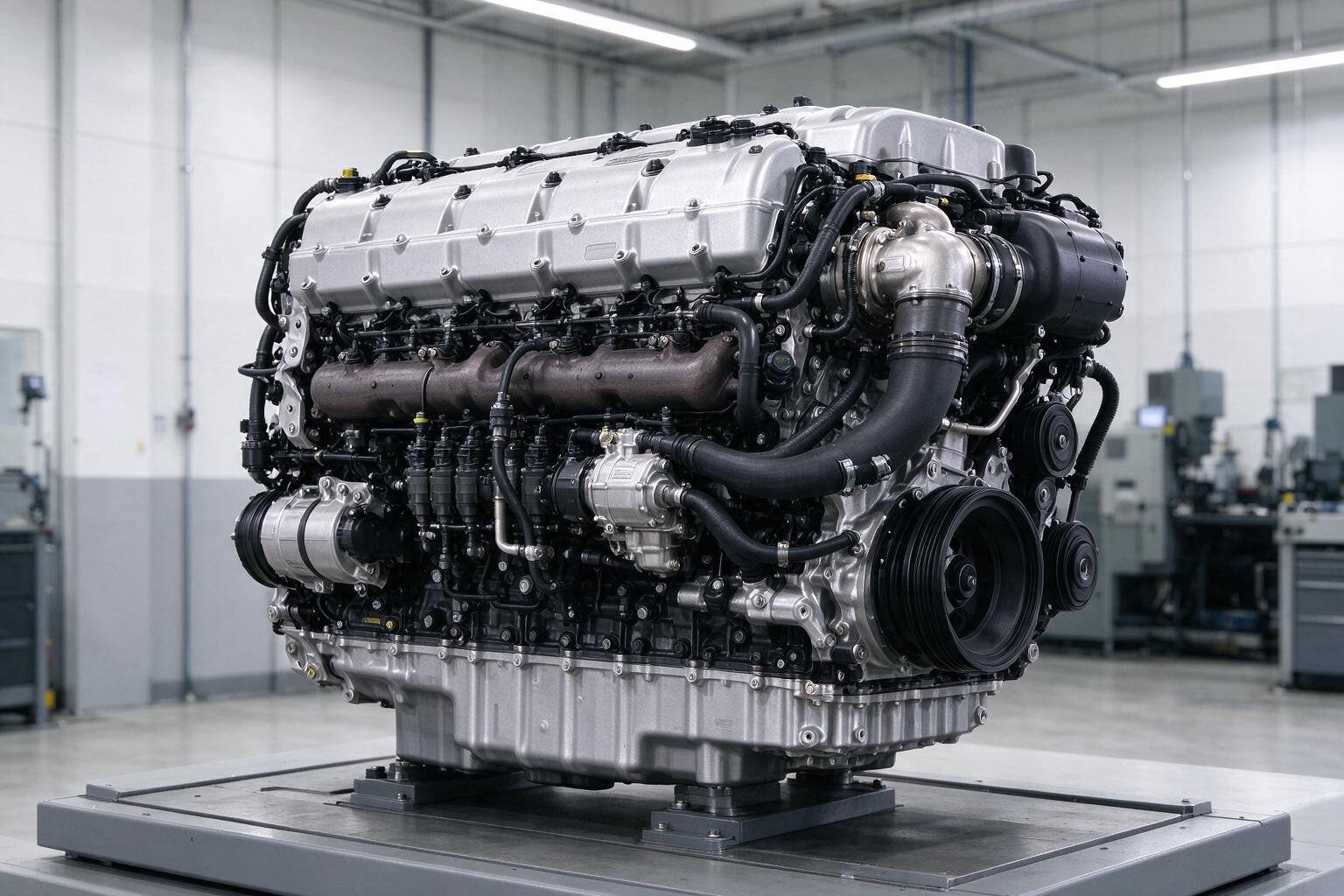
The Cummins ISX12 is an 11.9-liter inline-six diesel engine used in heavy-duty truck and vocational applications, including dump trucks, mixers, and regional haul tractors. When researching a Cummins ISX12 engine assembly price, it helps to first understand where the platform sits in the Cummins lineup: between the larger ISX15 and the smaller displacement platforms, produced in ratings that generally span roughly 310 to 450 horsepower with torque outputs suited to vocational duty cycles.
An engine assembly typically refers to the complete engine unit: block, cylinder head, rotating assembly (crankshaft, rods, pistons), and, depending on the seller, the fuel system and turbocharger. Because “engine assembly” is used loosely across the aftermarket, buyers should confirm exactly what is included in a quoted assembly before comparing prices. Common variations include:
| Configuration | Typical inclusions |
|---|---|
| Long block | Block, head, rotating assembly; no fuel system or turbo |
| Complete assembly | Long block plus injectors, fuel pump, turbocharger, and accessories |
| Drop-in assembly | Complete assembly with harness, ECM, and bolt-on components |
The ISX12 shares design lineage with the ISX15, but parts are
Key Factors That Determine ISX12 Engine Assembly Price
ISX12 engine assembly pricing varies widely because the product category covers several distinct grades of hardware. Buyers comparing quotes should confirm which variables are reflected in each figure.
Condition
Condition is the largest price variable. New assemblies sit at the top of the range, followed by remanufactured units built to a documented specification. Used running take-outs are priced lower and carry remaining service history rather than a rebuild record. Rebuildable cores occupy the bottom band and are valued mainly on core content and rebuild potential.
Configuration and Emissions Tier
EPA-compliant variants with aftertreatment integration carry higher component value than earlier configurations. Emissions hardware, sensor packages, and mixing or dosing components add cost, and the specific tier must match the intended application.
CPL and Rating
The Cummins Parts List (CPL) number and horsepower/torque rating affect price because higher-output variants use different pistons, injectors, and turbochargers. A quote is only comparable when the CPL and rating match the original engine or the intended replacement.
Completeness
Whether the ECM, harness, turbocharger, and accessories are included changes the quoted figure substantially. A long block and a drop-in assembly with electronics and turbo are different products at different prices.
Warranty and Documentation
Warranty terms and documentation add to cost but reduce buyer risk. Rebuild records, dyno sheets, and core acceptance policies factor into the final number.
Source and Region
Logistics, core availability, and local demand move pricing between suppliers and regions.
| Factor | Price Impact |
|---|---|
| Condition | Largest variable across new, reman, used, and core |
| Emissions tier | Higher with aftertreatment integration |
| CPL and rating | Higher-output variants cost more |
| Completeness | ECM, harness, turbo, accessories add cost |
| Warranty and documentation | Adds cost, reduces risk |
| Source and region | Varies with logistics and demand |
New, Remanufactured, and Used: Price Tiers Explained
Cummins ISX12 assembly pricing falls into four distinct tiers, each reflecting a different balance of cost, documentation, and risk.
New assemblies carry the highest price. They are typically sourced through authorized channels and arrive with full documentation, including build records and serial traceability. Buyers pay a premium for known provenance and the absence of prior service history.
Remanufactured assemblies are rebuilt to a defined specification: wear components such as bearings, pistons, and liners are replaced, and the finished unit usually carries a warranty. Pricing sits below new but above used, reflecting both the parts content and the warranty backing.
Used running take-outs offer the lowest entry price for a complete engine. They also carry the highest inspection burden, since condition depends on the donor unit’s service history. Warranty coverage is limited or absent, so buyers should budget for teardown inspection and possible rework.
Rebuildable cores are priced as raw material value rather than as functioning assemblies. They are intended for rebuilders, not direct installation, and should not be evaluated against running-engine pricing.
| Tier | Relative Price | Documentation | Warranty | Typical Buyer |
|---|---|---|---|---|
| New | Highest | Full | Yes | High-utilization fleets |
| Remanufactured | Mid-high | Build spec | Usually | Fleets, mixed service |
| Used take-out | Lowest running | Limited | Limited or none | Backup/low-hour equipment |
| Rebuildable core | Material value | Minimal | None | Rebuilders |
Tier selection should follow the application. High-utilization fleets generally justify remanufactured or new assemblies, where downtime cost and warranty coverage offset the higher purchase price. Low-hour or backup equipment may suit used units, provided inspection resources are available.
Core Charges and Exchange Programs
Many remanufactured and some used Cummins ISX12 engine assembly sales include a core charge, a refundable deposit added to the purchase price that is returned when a rebuildable core is sent back to the supplier. The charge functions as collateral: it protects the supplier’s rebuild pipeline and gives the buyer an incentive to return the old assembly rather than scrap it locally.
Core acceptance criteria vary by supplier but typically require a complete, non-cracked block and head with no catastrophic damage. Common disqualifiers include thrown rods that have punched through the block, cracked main webs, fire or heat damage, and missing major components such as the cylinder head or timing gear housing. Buyers should request the acceptance criteria in writing before purchase, because a core rejected at inspection can convert an expected refund into a sunk cost.
Because core charges can represent a meaningful portion of the total outlay for an ISX12 assembly, the refundable amount should be factored into budget comparisons between suppliers. A listing with a lower assembly price but a high, strictly enforced core charge may cost more in practice than a higher-priced assembly with a lenient core policy.
Return shipping and inspection timelines for cores also vary by supplier and should be confirmed before purchase. Relevant details include who pays freight on the core return, how many days the buyer has to ship the core after delivery of the replacement, and how long inspection takes before the refund is issued. These terms affect cash flow and should be documented alongside the assembly price itself.
What to Verify Before Requesting a Quote
An ISX12 assembly quote is only meaningful when the request carries the data needed to identify the correct configuration. Buyers should confirm the following before contacting a supplier.
Engine Identification
The engine serial number (ESN) from the original unit is the primary identifier. It ties the request to a specific build and allows the supplier to confirm bore, stroke, and component variation. The CPL (Critical Parts List) number should accompany the ESN. The CPL defines the exact parts combination used in that build, and assemblies quoted against a different CPL may not interchange cleanly.
Emissions and Application
The emissions tier must match the chassis and the regulatory requirements of the operating jurisdiction. Where an aftertreatment system is fitted, the configuration (DPF, SCR, or combined) should be stated, since assembly and calibration differences follow from it. A tier mismatch can render a low-cost quote unusable.
Power Rating and Driveline
Rated horsepower and torque should be specified so the assembly matches the transmission and driveline. A higher or lower rating than the original changes torque curve characteristics and can affect transmission programming and rear-axle ratio assumptions.
Inclusions and Warranty
Buyers should confirm whether the ECM, wiring harness, turbocharger, and accessory drives are included or supplied separately. Warranty terms should be documented in writing: duration, coverage scope (parts only versus parts and labor), and the claim process.
Rebuild Documentation
For remanufactured units, request the rebuild specification, including which components were replaced and which were reused or reconditioned. This record supports later service decisions and warranty claims.
Inspection Checklist for Used and Remanufactured Assemblies
A structured inspection before purchase reduces the risk of installing an assembly with hidden damage. The following checks apply to both used and remanufactured Cummins ISX12 assemblies, with additional documentation requirements for remanufactured units.
Mechanical Inspection
Cylinder liner protrusion. Measure liner protrusion at several points around each liner. Out-of-spec protrusion can indicate a deck that has been machined incorrectly or a liner that has shifted, and it affects head gasket sealing. Inspect the coolant and oil passages in the block and head for corrosion, pitting, or erosion; passage damage is often a sign of neglected coolant chemistry.
Block deck and cylinder head cracks. Inspect the deck surface and cylinder head for cracks, paying particular attention to injector bores and valve seats. Magnetic particle or dye penetrant inspection is preferable to visual inspection alone. Cracks in these areas can be difficult to see and may not surface until the engine is under load.
Camshaft and gear train. Check cam lobes, journals, and the gear train for wear, spalling, or tooth damage. Wear in these components affects injection timing and overall performance, and replacing them after installation adds significant cost.
Documentation and Identification
Oil analysis history. For used units, request any available oil analysis records. Trends in wear metals, coolant contamination, and fuel dilution provide context that a visual inspection cannot.
ESN and CPL consistency. Verify that the engine serial number on the assembly matches the documentation and that the critical parts list (CPL) is consistent with the intended application. A mismatched CPL can mean incorrect pistons, injectors, or turbocharger configuration.
Remanufactured build records. For remanufactured assemblies, request the build sheet and any test-run data, including dyno results where available.
| Check | Used | Remanufactured |
|---|---|---|
| Liner protrusion | Required | Required |
| Crack inspection | Required | Required |
| Oil analysis history | Request | Request |
| ESN/CPL verification | Required | Required |
| Build sheet and test data | Not applicable | Required |
Documenting each item at the time of inspection supports price comparison and provides a baseline for warranty discussions.
Freight, Logistics, and Total Cost of Ownership
A Cummins ISX12 engine assembly is a heavy freight item, typically shipping on a pallet at several hundred pounds. The assembly price quoted by a supplier is rarely the landed cost. Freight class, distance, and accessorial charges all affect the final figure, and crating quality matters because an inadequately braced pallet can shift in transit and damage components such as the turbocharger, oil pan, or front cover. Cargo insurance is a separate line item and should be confirmed in writing, since standard carrier liability is calculated by weight rather than replacement value.
Core return freight belongs in the same quote. Returning the old engine to the supplier or rebuilder carries its own shipping charge, and liftgate, residential, and limited-access delivery surcharges apply to both directions. Buyers should request these charges upfront rather than discovering them on the invoice.
Beyond the assembly itself, installation labor, coolant, oil, filters, and any required ECM reflash or parameter programming contribute to total cost. Reflash requirements vary by application and emissions configuration, so the labor estimate should account for diagnostic time and programming.
Downtime frequently exceeds the spread between price tiers. A lower-priced assembly with a multi-week lead time can cost more in lost revenue than a higher-priced unit available sooner. Lead time is therefore a material factor in the purchasing decision, not a secondary consideration, and should be evaluated alongside price, freight terms, and warranty coverage.
| Cost element | Typically quoted separately |
|---|---|
| Freight and crating | Yes |
| Cargo insurance | Yes |
| Core return freight | Yes |
| Liftgate or residential surcharge | Yes |
| Installation labor and fluids | Yes |
| ECM reflash | Yes |
Summary: Building a Comparable Price Basis
Cummins ISX12 engine assembly quotes vary widely because suppliers package different content at different price points. A meaningful comparison requires normalizing each offer before evaluating cost.
First, confirm that every quote uses the same inclusion list. An assembly may ship as a long block with cylinder head, oil pan, and front cover, or as a bare block with internals excluded. Accessories such as turbocharger, injectors, ECM, and exhaust components are frequently optional. Warranty terms also differ: duration, mileage limits, parts-only versus parts-and-labor coverage, and claim procedures should be compared line by line. Core policy is equally important, including core charge amount, acceptance criteria, and the return window.
Second, compare landed cost rather than sticker price. Freight for a complete ISX12 assembly is substantial and may be quoted separately or embedded in the unit price. Core refunds reduce net cost only if the returned core meets the supplier’s inspection standard. A lower headline price with a high core charge and excluded freight can exceed a higher quote with inclusive terms.
Third, match the tier and configuration to the application. Ratings, piston and liner specifications, and emissions hardware differ across ISX12 variants. A quote for a configuration outside the intended duty cycle is not a valid comparison, even at a lower price.
Finally, retain documentation for each quote, including the inclusion list, warranty document, and core terms. These records support warranty claims and inform future service and replacement decisions.