
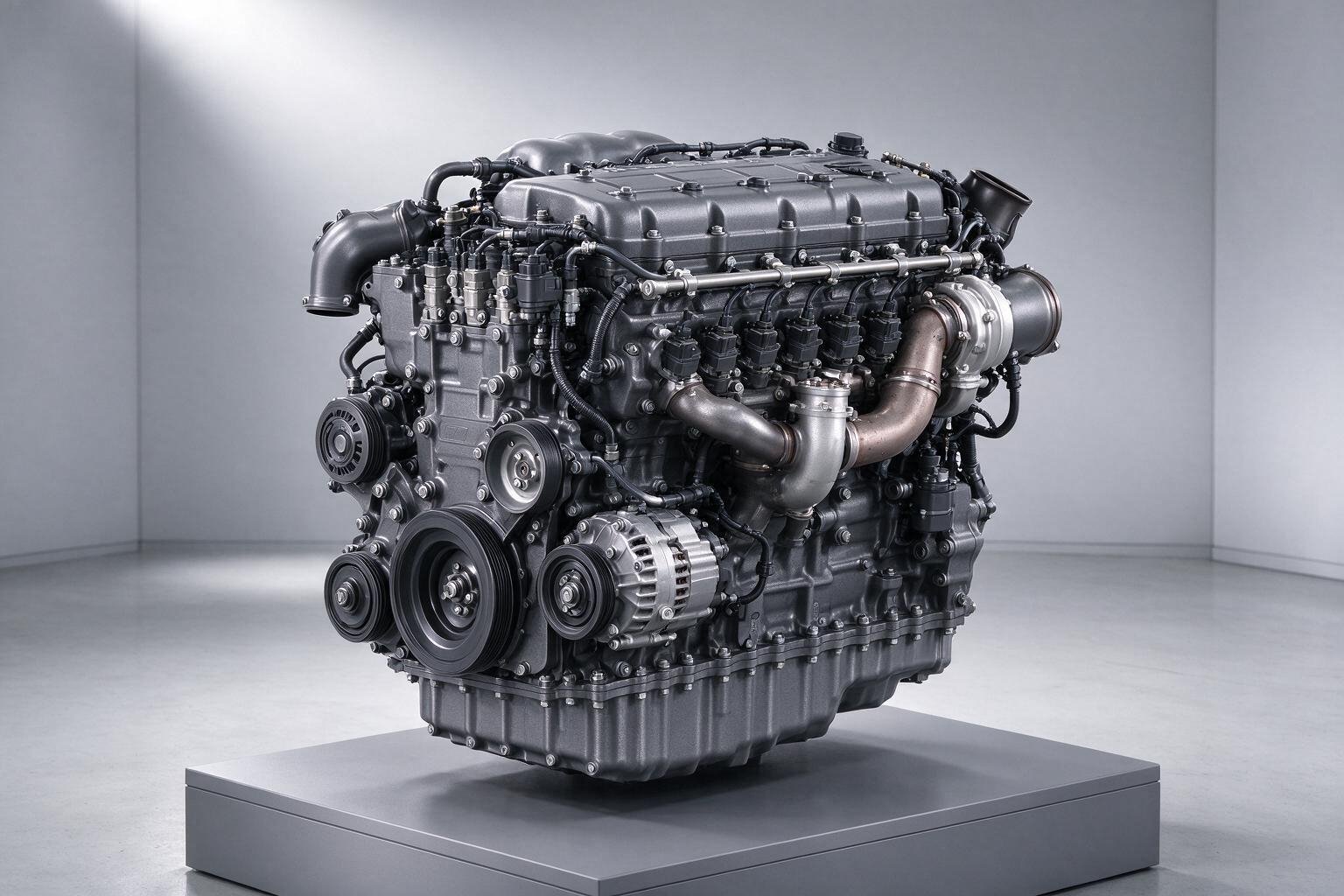
The Cummins ISX15 engine assembly price varies widely because the 15-liter inline-six diesel was produced in several emissions configurations, including EPA 2007, EPA 2010, and later variants. Any Cummins ISX15 engine assembly price therefore reflects not only condition and supplier but also which configuration the unit was built to. These configurations differ in cylinder head design, aftertreatment strategy, piston and injector specifications, and electronic controls, so the scope of an “engine assembly” listing varies considerably from one seller to the next. A quote that appears low for one configuration may reflect a narrower assembly scope rather than a better price.
Price Ranges by Supply Type
The Cummins ISX15 assembly market segments into four supply types, each with a distinct price structure and risk profile.
New OEM assemblies sit at the top of the market. These units carry full factory documentation, current part numbers, and the longest warranty coverage available. Buyers should expect the highest capital outlay in this category, with pricing driven largely by dealer network position and regional distribution costs.
Remanufactured assemblies typically fall 30-50 percent below new depending on warranty length and rebuild scope. A full-scope reman with a longer warranty will price closer to new; a short-block-style rebuild with limited coverage will price nearer the lower end of that band. Documentation quality varies by rebuilder, so the warranty terms and build sheet should be verified against the price.
Used take-out assemblies are the lowest-cost running option but carry the highest variance in remaining life and documentation quality. A take-out with compression test data, service records, and a known mileage will command a premium over an undocumented pull. Buyers should treat any used price as a starting point for inspection-based negotiation.
Rebuildable cores are priced as commodity metal plus core value and are not a substitute for a running assembly. Core pricing tracks scrap markets and is sensitive to block and head condition.
| Supply Type | Relative Position | Primary Price Driver |
|---|---|---|
| New OEM | Highest | Factory documentation, warranty |
| Remanufactured | 30-50% below new | Warranty length, rebuild scope |
| Used take-out | Lowest running option | Remaining life, documentation |
| Rebuildable core | Commodity + core value | Scrap metal market |
Prices vary widely by region, freight distance, and exchange rate. Any single figure should be treated as a reference band, not a quoted price.
Factors That Move the Price Most
Several variables drive the spread in Cummins ISX15 assembly pricing, and buyers comparing quotes should confirm each one is specified identically before treating the numbers as equivalent.
Emissions Tier
2010-and-later ISX15 assemblies with aftertreatment-compatible calibration generally command higher prices than earlier units. The later calibration packages, sensor sets, and documentation add cost that pre-2010 configurations do not carry.
Rating and CPL
High-horsepower ratings, typically 550-600 hp, use different pistons, injectors, and turbo matching than lower-rated engines. These part differences raise cost, and the CPL (Control Parts List) number should be verified against the intended application rather than assumed from the advertised horsepower.
Rebuild Scope
A full reman with new liners, pistons, head work, and a dynamometer run costs more than a re-ring or bearing-only refresh. The lower-priced option addresses wear surfaces only and leaves original components in place, so the two are not directly comparable.
Warranty
12-month, 24-month, and mileage-capped warranties are priced differently. Terms should be compared line by line, including what is covered, mileage limits, labor allowances, and claim procedures.
Core Charge
Refundable core deposits can add 20-40 percent to the invoice upfront and are only returned when the old assembly passes inspection. Cracked blocks, damaged crankshafts, or missing components can reduce or void the refund.
| Factor | Lower-cost end | Higher-cost end |
|---|---|---|
| Emissions tier | Pre-2010 | 2010-and-later |
| Rating | Standard output | 550-600 hp |
| Rebuild scope | Re-ring or bearings only | Full reman with dyno run |
| Warranty | 12-month | 24-month or mileage-capped |
| Core charge | Small or waived | 20-40 percent of invoice |
Reading a Quote Correctly
A Cummins ISX15 assembly quote contains several line items that determine the real cost of the transaction. Buyers should verify each one before comparing prices across suppliers.
Freight terms. The quote should state whether the price is EXW, FOB, or delivered. A crated ISX15 assembly weighs roughly 1,300–1,500 kg, so freight is a material cost, not an afterthought. Under EXW, the buyer pays freight and assumes risk from the seller’s dock. Under FOB, responsibility transfers at a named port or carrier. A delivered price includes freight to the destination and should name that destination. Buyers should also confirm who pays for liftgate service, crating, and any duties or customs clearance on cross-border shipments.
Core charge. The quote should show whether a core charge is included in the total or listed separately. If separate, the buyer needs the return window, the acceptable condition criteria (complete, not cracked, no spun bearings, all components present), and the inspection process that determines whether the core deposit is refunded in full or partially.
Dynamometer sheet. If a test is offered, the buyer should request the dyno sheet showing horsepower, torque, oil pressure, and blow-by results at specified operating points. These figures indicate whether the assembly meets the expected performance baseline.
Serial number and CPL. The quote should list the engine serial number and CPL (Critical Parts List). These must match the engine being replaced. A mismatched CPL can cause calibration errors, incorrect fuel mapping, and warranty disputes, because the ECM programming and component configuration are tied to the CPL.
Remanufactured Versus Used Versus New
The three supply paths for an ISX15 assembly differ mainly in risk profile and lead time, not just in price.
Remanufactured assemblies carry a predictable service life because the core is fully disassembled, inspected, and machined to published tolerances. Buyers should request the machining record: cylinder bore and deck surface dimensions, crankshaft journal grind sizes, and connecting rod reconditioning data. A written warranty covering parts and labor for a stated interval is standard. Upfront cost is the highest of the three, but risk per operating hour is the lowest.
Used take-out engines are the fastest to source and the least expensive. Before purchase, require a borescope inspection of cylinder walls and valve faces, oil analysis history where available, and either a compression test or a crankcase blow-by measurement. An engine without documented hours or service history should be priced accordingly.
New assemblies suit warranty-sensitive fleets and repower projects where the machine’s residual value justifies the premium. Lead time is the longest, often several weeks depending on build slot availability.
| Option | Upfront cost | Lead time | Documentation to request |
|---|---|---|---|
| Remanufactured | Highest | Moderate | Machining record, warranty terms |
| Used take-out | Lowest | Fastest | Borescope photos, oil analysis, compression or blow-by results |
| New | Highest | Longest | Build sheet, factory warranty |
For high-utilization line-haul fleets, remanufactured units generally deliver the best cost per mile. For low-hour seasonal equipment, a documented used unit can be a defensible choice.
Inspection and Verification Checklist
Before committing to an ISX15 assembly price, buyers should verify condition and configuration through documentation rather than description alone. The checklist below covers the items most likely to affect both the final cost and the suitability of the assembly for a given application.
Photographic and Identification Records
Request clear photos of the block deck surface, the liner bores, and the crankshaft journals. Deck photos should show the full sealing surface with no visible pitting, erosion, or evidence of previous resurfacing beyond specification. Liner bore photos should allow assessment of counterbore condition and any scoring. Crank journal photos should show surface finish and, where possible, measurement readings. Also request a photo of the data plate showing the engine serial number and CPL. The CPL determines the correct piston, injector, and calibration combination, so an assembly that does not match the target CPL may require additional parts and programming.
Pressure Testing and Head Condition
Confirm that the assembly has been pressure-tested and ask for the test pressure and duration. For the cylinder head, verification should include crack testing of the head casting and a check for valve recession at the seats. Receded valves affect compression and valvetrain geometry and are a common reason a used head requires rework.
Camshaft and Gear Train
The ISX15 front gear train is a known wear point. Verify the condition of the camshaft lobes, the cam gear, the crankshaft gear, and the idler gears, including backlash measurements where available.
Injectors and ECM
If injectors and ECM are included, confirm part numbers and whether the ECM is programmed to the target rating. A mismatched calibration can negate the value of an otherwise correct assembly.
| Item | Verification |
|---|---|
| Block deck, liner bores, crank journals | Photos with measurements |
| Data plate | Serial number and CPL match |
| Pressure test | Pressure and duration recorded |
| Head | Crack test and valve recession check |
| Gear train | Cam, crank, and idler gear condition |
| Injectors and ECM | Part numbers and rating programming |
Freight, Core Return, and Total Landed Cost
Crated ISX15 assemblies normally ship on a pallet by LTL freight. Because a complete assembly with crate typically exceeds the weight and size limits for parcel carriers, LTL is the standard method. Buyers should confirm whether the quoted price is freight prepaid, collect, or FOB origin. Liftgate service and residential delivery surcharges apply when a forklift or loading dock is not available at the delivery address; these accessorial charges are frequently excluded from advertised prices and can add a noticeable amount to the invoice. Transit damage claims are also easier to resolve when the shipment is insured and photographed at delivery.
Core returns must usually be drained of fluids and shipped in the same crate to qualify for refund. Contaminated or incomplete cores, or cores returned in different packaging, are commonly rejected or subject to a partial credit. Buyers should confirm the core charge amount, the return window, and who pays return freight before ordering.
Duties, taxes, and brokerage can add materially to cross-border purchases. Total landed cost should be calculated before comparing sellers:
| Cost element | Typical treatment |
|---|---|
| Assembly price | Quoted by seller |
| LTL freight | Often separate |
| Liftgate / residential surcharge | Accessorial, often separate |
| Core charge | Refundable on qualified return |
| Duties, taxes, brokerage | Cross-border only |
Lead time differences of several weeks can outweigh small price gaps when a truck is out of service. A lower-priced assembly with a long backorder may cost more in downtime than a slightly higher-priced unit that ships promptly.
Summary Selection Criteria
Selecting an ISX15 engine assembly starts with configuration control, not price. The CPL (Control Parts List) and emissions tier must match the application before any commercial comparison is meaningful. A CPL mismatch can change injectors, pistons, camshaft profile, turbocharger, and aftertreatment calibration; an assembly built to the wrong tier may fit physically but fail emissions verification or derate in service. Buyers should confirm the CPL stamped on the data plate against the original engine record and the intended chassis or equipment application.
Once configuration is fixed, compare rebuild scope, warranty, and core terms across suppliers. Rebuild scope should specify what was replaced versus reused: cylinder head condition, liner and piston kit, bearings, oil pump, and whether the block and crankshaft were magnafluxed. Warranty terms should state duration, hours or mileage limits, labour coverage, and exclusions. Core credit terms should define acceptance criteria and return freight responsibility.
Written documentation is a baseline requirement, not an optional extra. Request the bill of materials (BOM), a dynamometer test sheet with break-in and load data, serial and CPL verification, and the full warranty document. Suppliers unable to provide these in writing introduce unquantified risk.
Compare total landed cost rather than sticker price. Freight class and weight, core charges and return shipping, and applicable duties or taxes can shift the effective cost by a meaningful margin between otherwise similar quotes.
| Cost element | Included in comparison |
|---|---|
| Unit price | Yes |
| Inbound freight | Yes |
| Core charge and return freight | Yes |
| Duties and taxes | Yes |
Price bands are useful only to screen candidates and flag outliers. Final selection should rest on documentation quality and physical inspection evidence, including test data and serial verification.