
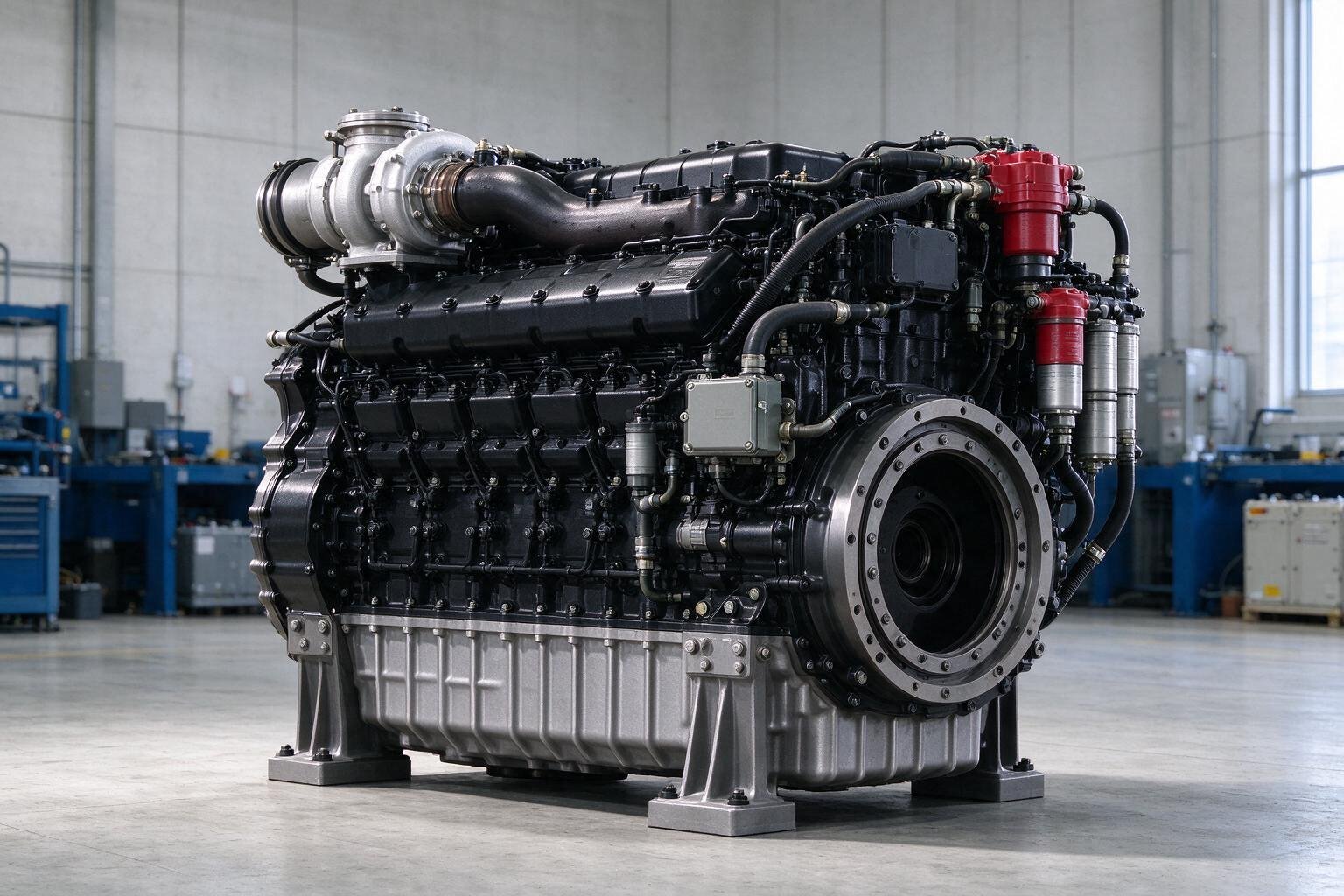
The Cummins QSK23 engine assembly price depends on configuration, so buyers should first understand what the platform is. The QSK23 is a 23-liter, six-cylinder inline diesel engine within the Cummins heavy-duty QSK series. It is used across several demanding duty cycles, including mining haul trucks, excavators, locomotives, and stationary power generation. The platform’s displacement and inline-six architecture suit applications that require high torque at low speed and sustained output over long service intervals.
Common ratings fall roughly in the 600 to 900 hp range, depending on the application and calibration. Final ratings are set by the original equipment manufacturer (OEM) for the specific machine, so the same base engine can be delivered in different states of tune. This matters when comparing assemblies, because a rating change often corresponds to different pistons, injectors, turbocharger matching, or ECM calibration.
An engine assembly, also called a complete engine or drop-in engine, typically includes the block, crankshaft, pistons, cylinder head, camshaft, and oil pump. Depending on how the assembly is quoted, it may or may not include the fuel system, turbocharger, and ECM. Assemblies quoted with these components carry a higher price than long-blo
What Determines the Price of a QSK23 Engine Assembly
Quoted prices for a Cummins QSK23 engine assembly vary widely because the term “assembly” covers several distinct scopes. A long block (block, crankshaft, rods, pistons, camshaft, and cylinder head) sits at the low end. A partial assembly adds the oil pump, water pump, and front gear train. A fully dressed drop-in engine includes the fuel system, turbocharger, manifolds, wiring harness, and sometimes the aftertreatment components. Buyers should confirm the bill of materials line by line before comparing quotes.
Emission tier and calibration also drive cost. Early mechanical or first-generation electronic variants use different fuel systems and lack aftertreatment compatibility, while later Tier-rated versions carry higher-cost injectors, ECM calibrations, and sensor packages. The calibration must match the intended application and emissions regime.
Core charges are separate from the quoted price. Remanufactured or exchange assemblies typically require a refundable core deposit, refunded only when the returned core passes inspection. Freight is a material line item: a QSK23 assembly is heavy and bulky, requiring crating, flatbed or LTL handling, and lifting equipment at both ends.
Provenance affects price as well. Genuine, OEM-equivalent, and aftermarket sources differ in parts traceability, documentation, and warranty terms. Coverage duration, labor allowance, and claim process vary between suppliers, so warranty language should be compared alongside the price.
| Cost factor | Typical impact |
|---|---|
| Configuration scope | Long block to drop-in: large spread |
| Emission tier and calibration | Fuel system and aftertreatment differences |
| Core deposit | Refundable, separate from price |
| Freight and crating | Heavy, bulky, lifting required |
| Warranty terms | Duration and labor allowance vary |
New, Rebuilt, and Used Assemblies Compared
The Cummins QSK23 is a 23-liter, six-cylinder industrial diesel used in mining haul trucks, power generation, and heavy construction equipment. Assembly pricing varies widely by condition, and each category carries distinct trade-offs.
New assemblies ship with full documentation, including a serialized bill of materials and a manufacturer warranty. They carry the highest cost and, for certain horsepower and torque ratings, lead times can extend substantially due to build-to-order scheduling. New units suit applications where downtime penalties or warranty continuity outweigh the acquisition premium.
Factory remanufactured or rebuilt assemblies are returned to specification with wear components replaced, including bearings, pistons, liners, and valvetrain parts as required. These typically include a warranty, though terms and coverage periods vary by rebuilder. Pricing sits between new and used, making remanufactured units a common choice for fleet operators seeking predictable service life without new-unit cost.
Used or take-out assemblies are the lowest-cost option but carry the highest risk. Buyers should verify service history, accumulated hours, and compression test results before purchase. Visual inspection of the block, crankshaft, and camshaft is advisable where access permits.
| Assembly Type | Relative Cost | Warranty | Documentation | Risk |
|---|---|---|---|---|
| New | Highest | Manufacturer | Full | Lowest |
| Rebuilt / Remanufactured | Mid-range | Typically included | Rebuilder-dependent | Moderate |
| Used / Take-out | Lowest | Usually none | Often limited | Highest |
Assembly type should match the duty cycle. High-hour mining and power generation applications generally justify new or certified remanufactured units, where extended service intervals and warranty backing offset the higher initial price.
How to Read a Quotation
A QSK23 assembly quotation should be read as a scope-and-terms document, not a price alone. Several items determine whether the quoted figure reflects the actual cost of a like-for-like replacement.
Serial number and calibration. The quotation should be tied to the engine serial number (ESN) and the original rating or calibration code. The ESN identifies the build configuration, and the calibration defines the power rating and emissions certification the replacement must match. Without both, the quoted assembly cannot be verified against the machine’s requirements, and a mismatch may affect output, fuel mapping, or compliance.
Included components. Confirm line by line whether the fuel injection pump, injectors, turbocharger, ECM, wiring harness, and aftertreatment components are part of the assembly price or billed separately. A bare long block and a dressed assembly carry very different totals, and partially dressed assemblies shift installation work and cost to the buyer.
Core charge and return. Ask for the core charge amount, the conditions under which a core is accepted (completeness, damage, drain requirements), and the return deadline. Missing the deadline typically forfeits the deposit.
Warranty in writing. The quotation should state duration, any hours limit, whether parts and labor are both covered, and who administers claims. Verbal assurances are difficult to enforce.
Freight and delivery. Clarify Incoterms for cross-border shipments, packaging specification, and who is responsible for unloading at destination.
| Item | What to confirm |
|---|---|
| ESN and calibration | Recorded on the quotation |
| Components | Pump, injectors, turbo, ECM, harness, aftertreatment listed |
| Core | Charge, acceptance conditions, return deadline |
| Warranty | Duration, hours cap, parts/labor, claims contact |
| Freight | Incoterms, packaging, unloading responsibility |
Inspection and Verification Before Purchase
Verification steps before purchasing a QSK23 engine assembly reduce the risk of fitting a unit with the wrong rating, build configuration, or application hardware.
Engine serial number (ESN). The ESN on the data plate should be checked against Cummins records where access is available, either through a dealer or an authorized service provider. This confirms the advertised rating, the build configuration (for example, whether the unit was built for a specific emissions tier or market), and whether the assembly matches the model year stated by the seller.
Visual documentation. Request photographs or a short video of the assembly before committing. Useful views include the block deck surface, each cylinder bore (with the piston at or near bottom dead center), the main bearing saddles if the pan is off, and a clear, legible image of the serial plate. These images allow a preliminary assessment of corrosion, pitting, sleeve condition, and plate authenticity.
Rebuild documentation. For rebuilt assemblies, ask for the rebuild report. It should list replaced components (pistons, liners, bearings, gaskets, seals) and any machining performed, such as deck resurfacing, line boring, or cylinder head work. A report that omits machining details is incomplete.
Calibration and aftertreatment compatibility. Confirm the assembly suits the machine’s existing ECM calibration. A different rating or build configuration may require a matching calibration file. Where the application uses aftertreatment, verify the assembly is compatible with the installed system and its sensors.
Mounting hardware. Check that lifting points, the flywheel housing SAE size, and the rear housing bolt pattern match the intended application.
| Check | Evidence to request |
|---|---|
| ESN and rating | Dealer or Cummins record confirmation |
| Block and bores | Photos or video, deck and bores |
| Rebuild scope | Written rebuild report with machining notes |
| ECM and aftertreatment | Calibration part number and emissions tier |
| Mounting | Flywheel housing SAE size and lifting points |
Typical Price Range Factors and Budgeting
The price of a Cummins QSK23 engine assembly is not fixed and varies with region, currency, and supply conditions. Import duties, freight, distributor margins, and local availability all shift the figure, and exchange-rate movement can change the landed cost of a unit quoted in another currency. Buyers should obtain multiple quotes for an identical scope—same configuration, same included components, same delivery terms—so the quotes form a usable benchmark rather than a set of figures that cannot be compared directly.
The assembly price is only part of the budget. Installation labor, coolant and lubricants, filters, driveline or generator alignment, and any calibration or commissioning work should be costed as separate line items. For a unit of this size, these items are not incidental and are frequently underestimated.
Downtime also carries cost. Lead time often matters as much as unit price in fleet and power generation planning, because a lower-priced assembly with a long delivery window can cost more in lost service hours than a higher-priced unit available sooner. Budgeting should therefore weigh delivery schedule alongside the purchase figure.
Total cost of ownership provides the final check. Fuel efficiency, service intervals, and the scope of warranty support can offset a higher initial price over the service life of the engine. A structured budget comparison might look like this:
| Cost category | Basis for estimate |
|---|---|
| Engine assembly | Multiple quotes, identical scope |
| Freight and duties | Landed cost by region and currency |
| Installation and alignment | Local labor rates, site conditions |
| Fluids, filters, consumables | Fill volumes and service schedule |
| Calibration and commissioning | Provider rates, scope of work |
| Downtime | Lost service hours against lead time |
Each category should be estimated separately so that the total reflects the real cost of putting the engine into service.
Supplier Evaluation Checklist
Buyers sourcing a Cummins QSK23 engine assembly should apply a structured evaluation before committing to a purchase. The checklist below covers documentation, traceability, warranty terms, and communication practices that separate reliable suppliers from higher-risk ones.
Documentation and Experience
Request the supplier’s business licence and confirm that the registered scope of activity covers engine assemblies or related industrial parts. Ask for evidence of export experience, including shipping records or customs documentation for comparable destinations. References from buyers who have purchased QSK23 assemblies or similar heavy-duty engines for mining, power generation, or marine applications provide the most useful signal, since those applications place similar demands on component quality and documentation.
Traceability and Shipping Documents
Confirm how the supplier traces major components. For a QSK23 assembly, the cylinder block, crankshaft, cylinder head, and fuel system components should be identifiable by part number and, where available, serial number. Ask whether traceability documentation, inspection reports, and packing lists accompany the shipment. Suppliers unable to describe this process in specific terms warrant closer scrutiny.
Warranty and After-Sales Terms
Obtain the warranty policy and after-sales process in writing before payment. The document should state the warranty period, what is covered, who performs the assessment, and how claims are handled, including the location of any inspection. Verbal assurances are difficult to enforce after delivery.
Communication and Quotation Review
Confirm the channels available for technical questions and the expected response time. A supplier that answers specification questions promptly before the sale is more likely to respond after it. Finally, treat quotes significantly below market with caution unless the supplier explains the scope and provenance of the goods clearly. A lower price may reflect a different configuration, remanufactured rather than new components, or incomplete documentation.
Summary
The price of a Cummins QSK23 engine assembly is driven by several variables that should be evaluated together rather than in isolation. Configuration scope is the first: a bare long block, a partial assembly, and a fully dressed engine with aftertreatment, harness, and accessories represent substantially different cost bases. Emission tier also matters, since Tier 2, Tier 3, and Tier 4 Final configurations use different fuel systems, aftertreatment hardware, and calibration, and availability varies by tier. Assembly type is a third factor: new, remanufactured, and used assemblies occupy distinct price bands, with remanufactured units typically positioned between the other two and used units priced according to condition and remaining life. Provenance affects value as well, including whether the assembly carries documented rebuild history, test records, and traceable core handling. Freight is often underestimated for a 23-liter industrial engine, given its weight and the crating, lifting, and shipping class involved.
For buyers, three controls reduce risk. Accurate matching by engine serial number (ESN) and rating confirms the correct assembly, fuel system, and calibration before pricing is finalised. A clearly scoped quotation should itemize what is included and excluded, from core charges to fluids and startup support. Documented warranty terms, including duration, coverage limits, and claims process, belong in the comparison rather than in post-purchase discussion.
Comparing multiple quotations on an identical scope, same ESN, same configuration, same warranty basis, provides the most reliable foundation for a purchasing decision.