
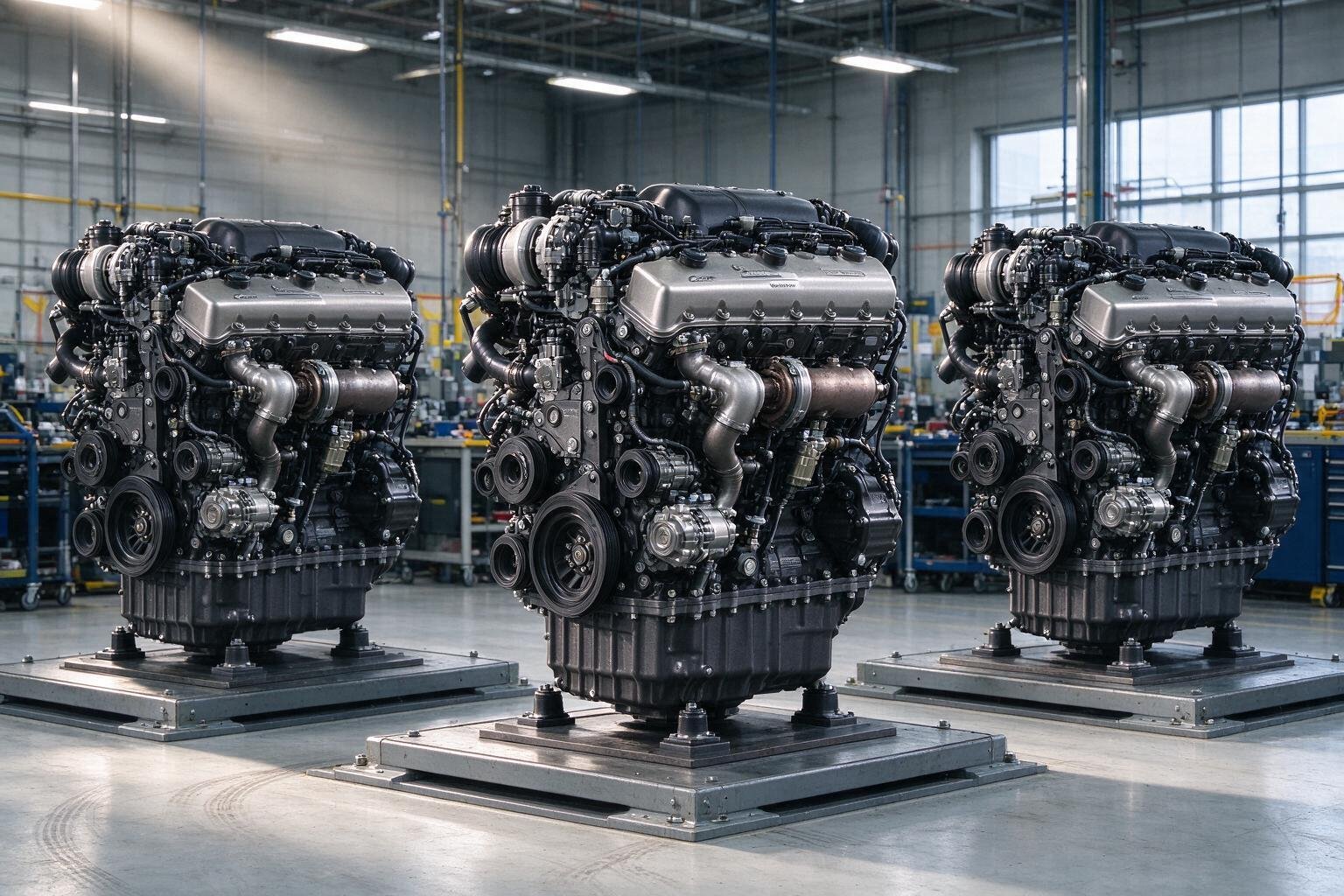
The Cummins ISX is a heavy-duty diesel engine used in commercial trucks and industrial applications, and any Cummins ISX engine assembly supplier comparison should begin with the platform’s basic specifications. The engine is built around a 15-liter displacement in its primary ISX15 configuration, with power outputs ranging from 400 to 600 hp depending on rating and calibration. A smaller ISX12 variant exists for applications with lower displacement requirements. These engines are common in line-haul tractors, vocational trucks, and stationary or industrial equipment where high torque and sustained duty cycles are required.
Key Criteria for Supplier Evaluation
Comparing Cummins ISX engine assembly suppliers requires a structured assessment of four areas: technical competence, quality assurance, warranty terms, and logistics and support.
Technical competence
Suppliers should demonstrate working knowledge of ISX platform specifications, including torque values for main bearing caps, connecting rods, and cylinder head bolts, as well as liner protrusion, piston-to-bore clearance, and valve lash settings. Familiarity with component interchangeability across ISX configurations (for example, CM870, CM871, and CM2250 variants) matters when assemblies are built for a specific application. Suppliers who cannot cite these specifications or explain how they verify them during assembly warrant closer scrutiny.
Quality assurance
Documented quality control is a baseline expectation. This includes adherence to OEM specifications, use of genuine or OE-equivalent components, and traceable inspection records such as torque audit logs, clearance measurements, and run-in or leak test results. Ask whether the supplier provides documentation with each assembly and how nonconforming parts are handled.
Warranty terms
Warranty duration typically ranges from 6 to 24 months. Buyers should confirm what is covered (parts only versus parts and labor), whether coverage extends to consequential damage, and the claim procedure, including required documentation and turnaround time for resolution.
Logistics and support
Availability of technical documentation, such as installation guides and torque sheets, supports correct installation. Core return policies affect total cost, particularly for heavy assemblies where freight is significant. Shipping options should account for crating, lift points, and transit insurance.
| Criterion | What to Verify |
|---|---|
| Technical competence | ISX torque specs, clearances, interchangeability knowledge |
| Quality assurance | OEM adherence, component sourcing, inspection records |
| Warranty | Duration (6–24 months), coverage, claim process |
| Logistics | Documentation, core returns, heavy-freight shipping |
Supplier Types: OEM, Aftermarket, and Remanufactured
Cummins ISX engine assemblies reach the market through three distinct supply channels, each with different cost structures, warranty terms, and quality variables.
OEM suppliers provide new assemblies built to original Cummins specifications, using production-intent components and documented torque, clearance, and calibration values. These assemblies typically carry the fullest warranty coverage and the highest purchase price. For applications where downtime cost or regulatory compliance outweighs acquisition cost, OEM is the reference standard against which the other categories are measured.
Aftermarket suppliers offer new assemblies that may combine OEM components with equivalent or reverse-engineered parts. Quality varies considerably by supplier: the critical variables are the sourcing standards for internal components (pistons, liners, bearings, injectors) and the assembly and inspection procedures used during build. Buyers should request component traceability and assembly documentation rather than relying on the “new” label alone, since a new assembly built to loose tolerances carries risk comparable to a used unit.
Remanufactured assemblies are rebuilt to OEM specifications, often incorporating updated components introduced after the original build date. The core is inspected, machined as required, and reassembled with new wear parts. This category balances cost and reliability and supports sustainability goals through core reuse. Reman quality depends heavily on the rebuilder’s machining tolerances and core acceptance criteria.
| Type | Condition | Warranty | Relative Cost | Best Fit |
|---|---|---|---|---|
| OEM | New, original spec | Fullest | Highest | Critical applications |
| Aftermarket | New, mixed sourcing | Varies | Moderate | Cost-sensitive projects |
| Remanufactured | Rebuilt to OEM spec | Moderate to full | Lowest to moderate | Sustainability and value |
Selection should follow the application’s duty cycle, warranty requirements, and acceptable downtime.
Comparing Specifications and Component Quality
Component-level comparison is the most reliable way to distinguish ISX assemblies, since visual inspection alone rarely reveals material or tolerance differences.
Cylinder Block and Head
OEM blocks are typically high-strength cast iron with documented material grades. Suppliers should state the grade and provide machining tolerances for deck flatness, bore roundness, and liner protrusion. Surface finish (Ra values) on the deck and head mating surfaces affects gasket sealing. Aftermarket blocks may use equivalent iron but with wider tolerance bands; request inspection reports rather than relying on catalog claims.
Crankshaft and Bearings
Confirm whether the crankshaft is forged steel or cast. Forged units generally offer higher fatigue strength for high-load applications. Bearing brand matters: Federal Mogul and Clevite are common references, and unbranded bearings should be treated with caution. Check journal hardness and fillet geometry against ISX specification.
Pistons and Rings
Piston design varies: articulated (two-piece) versus one-piece constructions suit different load profiles. Coating type—such as anodized crowns or skirt coatings—affects scuff resistance and service life. Ring sets should match the piston groove dimensions and specified tension.
Turbocharger and Fuel System
Verify compatibility with the specific ISX model (e.g., ISX15) and emissions configuration. Aftermarket suppliers may fit different turbo brands or injector sources, which changes boost response, fuel delivery, and calibration compatibility. Part numbers on the turbo data plate and injector body should be cross-referenced against the engine serial number.
| Component | Key Check | Common Variance |
|---|---|---|
| Block/head | Material grade, tolerances | Wider tolerance bands |
| Crankshaft | Forged vs. cast | Material substitution |
| Bearings | Brand (Federal Mogul, Clevite) | Unbranded units |
| Pistons/rings | Design, coating | Coating thickness |
| Turbo/fuel | Model compatibility | Alternate brands |
Warranty and After-Sales Support Comparison
Warranty terms are one of the clearest differentiators between Cummins ISX engine assembly sources, and they should be evaluated line by line rather than by headline duration alone.
Warranty Duration
Original equipment assemblies typically carry a 24-month, unlimited-mile warranty when installed through an authorized dealer network. Aftermarket new and remanufactured assemblies commonly range from 6 to 12 months, though some remanufacturers extend coverage to 24 months on specific long-block configurations. Buyers should confirm whether the stated period begins at the invoice date or at installation, since the two can differ by weeks or months.
Coverage Scope
Coverage structure varies significantly across suppliers. Some warranties are parts-only, leaving the buyer responsible for removal, replacement labor, coolant, filters, and related consumables. Others include labor reimbursement at a published rate, often capped per hour and per claim. Terms may also exclude consequential damages, downtime costs, or failures tied to improper installation, fuel system contamination, or non-compliant break-in procedures. Reading the exclusions section is as important as reading the duration.
Claim Process
Claim handling quality is difficult to assess before a failure occurs. Buyers can request the written claim procedure in advance and check how documentation, inspection, and return of the failed unit are handled. Responsiveness during the pre-sale inquiry is a reasonable indicator of post-sale support.
Technical Support
Installation guidance and troubleshooting assistance vary widely. Suppliers offering torque specifications, break-in procedures, and access to technical staff during installation reduce the risk of avoidable warranty disputes.
| Factor | OEM | Aftermarket / Remanufactured |
|---|---|---|
| Typical duration | 24 months, unlimited miles | 6 to 12 months, sometimes longer |
| Labor coverage | Often included via dealer network | Frequently parts-only |
| Claim filing | Standardized dealer process | Supplier-specific; request procedure |
| Technical support | Dealer service network | Varies by supplier |
Pricing Factors and Total Cost of Ownership
Purchase price is only one component of the cost of an ISX engine assembly. Buyers comparing OEM, remanufactured, and aftermarket suppliers should evaluate four cost categories together.
Initial Cost
OEM assemblies carry the highest purchase price, reflecting new components, factory tolerances, and manufacturer-backed documentation. Remanufactured assemblies typically cost less, since major castings are reused and worn parts replaced to specification. Aftermarket new assemblies sit between the two, but pricing varies widely by supplier, component sourcing, and the extent of included hardware. Quotes should be compared on a like-for-like basis: complete assembly versus long block, with or without injectors, turbocharger, and accessory drives.
Core Charges
Remanufactured assemblies usually require a core return. The core deposit is refundable only if the returned block and head meet inspection criteria for cracks, warpage, and prior overhauls. Return shipping, freight class, and palletizing add cost, and a rejected core converts the deposit into a permanent charge. These amounts belong in the comparison, not in a separate budget line.
Downtime Cost
Reliability drives total cost more than sticker price in fleet operations. A lower-priced assembly with a higher failure risk can erase its savings through unplanned roadside service, towing, lost revenue per vehicle-day, and repeat labor. Suppliers with documented build processes, torque records, and dyno testing reduce this exposure.
Warranty Value
Longer warranty terms can justify a higher initial price by transferring risk to the supplier. Buyers should compare coverage duration, mileage limits, labor allowance, and exclusions for consequential damage. A warranty that covers parts only offers less protection than one including labor and progressive damage.
| Factor | OEM | Remanufactured | Aftermarket New |
|---|---|---|---|
| Initial price | Highest | Lower | Variable |
| Core charge | None | Usually required | None |
| Warranty term | Standard | Varies by rebuilder | Varies by supplier |
| Downtime risk | Lowest | Moderate | Supplier-dependent |
Supplier Verification Checklist
Buyers comparing Cummins ISX engine assembly suppliers should apply a consistent verification process before committing to a purchase. The ISX platform has multiple configurations and revision levels, so documentation and part-number accuracy matter as much as price.
Request Documentation
Ask each supplier for ISO 9001 or IATF 16949 certification, quality control reports covering torque specifications and dimensional checks, and warranty terms in writing. Warranty documents should state the coverage period, what is excluded, and the claims process. Verbal assurances are insufficient for a purchasing decision.
Check References
Request customer testimonials or case studies from applications similar to the intended use, such as line-haul trucking, vocational service, or fleet overhaul programs. References from comparable duty cycles are more informative than general statements of satisfaction.
Inspect Samples
Where feasible, review a sample assembly for workmanship: cleanliness of machined surfaces, condition of threaded holes, presence of installation hardware, and consistency of component branding. Branded components from established manufacturers are easier to trace than unbranded parts.
Verify Part Numbers
Cross-reference the supplier’s part numbers against the Cummins parts catalog to confirm fitment for the specific ISX configuration and build year. Part numbers that do not resolve in the catalog, or that map to multiple unrelated applications, warrant caution.
Verification Summary
| Check | Evidence to Request | Red Flag |
|---|---|---|
| Certification | ISO 9001 or IATF 16949 certificate | Certificate expired or scope unclear |
| Quality control | Inspection and torque reports | No records available |
| Warranty | Written terms with exclusions | Verbal-only coverage |
| References | Case studies from similar use | No verifiable contacts |
| Samples | Physical assembly review | Refusal to provide samples |
| Part numbers | Catalog cross-reference | Numbers not found in catalog |
Documenting each item creates a comparable record across suppliers and supports an informed sourcing decision.
Making the Final Decision
Supplier selection for Cummins ISX engine assemblies should follow the application rather than a single default preference. For primary revenue equipment, an OEM assembly is the appropriate match where uptime directly affects operating income and where documentation of genuine components supports resale value and warranty continuity. For backup units or seasonal equipment with lower duty cycles, a remanufactured assembly can meet operational requirements at a lower capital outlay, provided the remanufacturer publishes its inspection and test criteria.
Warranty and price should be weighed together rather than separately. A modestly higher unit price paired with comprehensive coverage—including parts and labor, defined claim turnaround, and no prorated periods on major castings—often produces a lower cost per operating hour than a cheaper assembly with limited or labor-excluded coverage. Buyers should compare coverage duration, mileage or hour limits, and exclusions line by line.
Logistics carry disproportionate weight for heavy assemblies. An ISX long block or complete drop-in unit involves freight class, liftgate or dock requirements, and crating that can add several hundred dollars and multiple transit days. A supplier within regional freight distance reduces both shipping cost and the downtime associated with core pickup and replacement delivery.
Contract terms merit review before order placement. Core return windows, acceptance criteria for the returned block, warranty claim procedures, and restocking or cancellation policies should be stated in writing. Ambiguity in core credit terms is a common source of post-installation disputes.
| Decision Factor | OEM Assembly | Remanufactured Assembly |
|---|---|---|
| Best application | Primary revenue equipment | Backup or low-duty units |
| Warranty focus | Coverage term and labor inclusion | Claim process and exclusions |
| Logistics | Regional supplier preferred | Regional supplier preferred |
| Contract review | Core and return terms | Core credit criteria |
The final selection should reflect documented comparison of these four factors against the specific duty cycle and financial exposure of the unit being repaired.